
Introduction
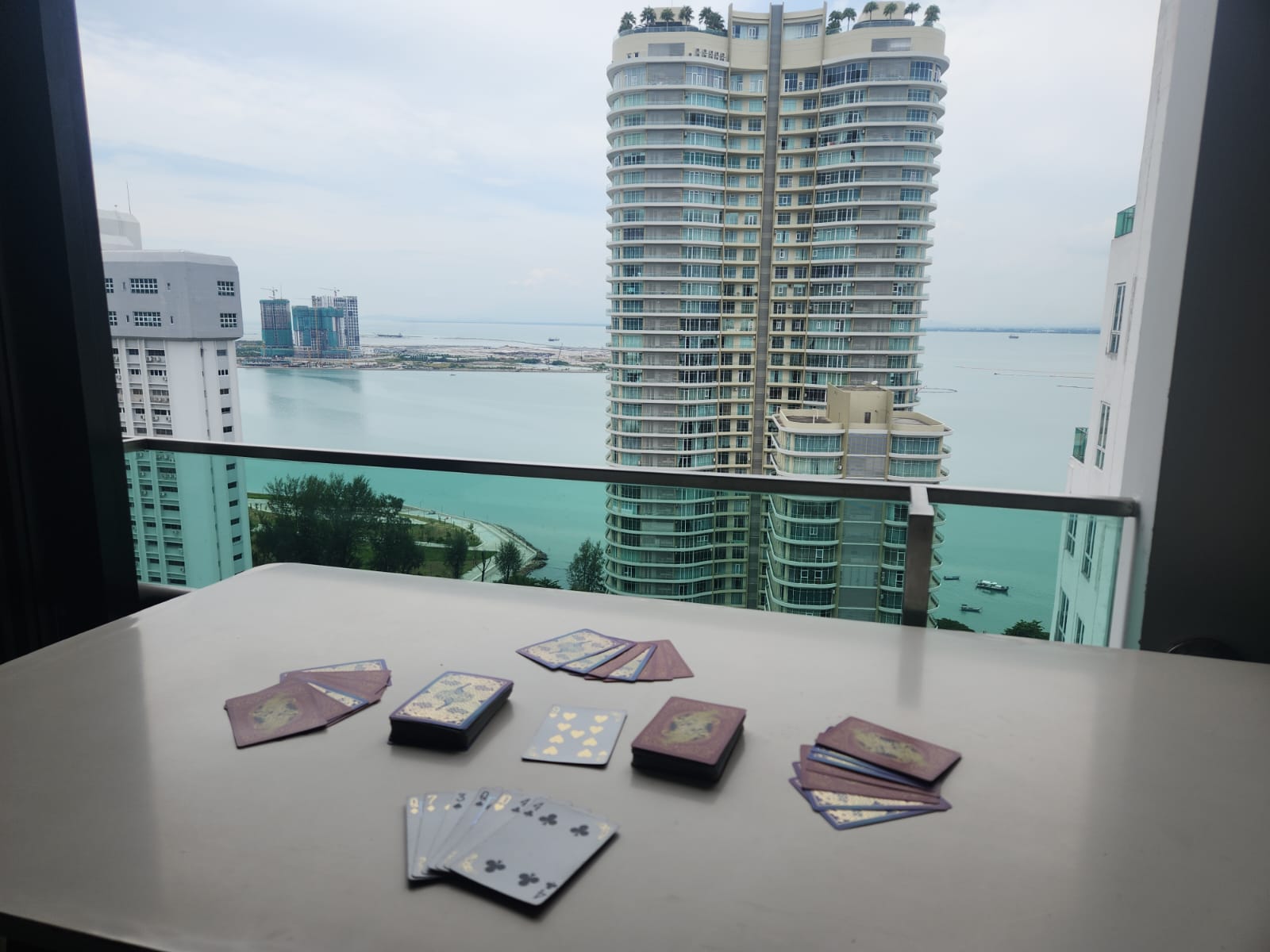
This game is known as Dirt (full name is Dirt on Your Neighbor). I was unable to find the rules for this exact game online as other similar **** Your Neighbor games are different. It is a shedding card game somewhere in the arena of Switch and Uno. This is our family “house rules” variation. Enjoy!!
Players and Cards
3+ players, the game is ideal with 4 to 6 (for larger groups, add additional decks). See the end for variations as you can play this as a partner game as well.
Three standard 52 card decks are used with jokers (preferably two per deck). The magic/special cards include:
- Joker: wild, changes suit, next person draws 5 cards (or plays another joker)
- Jack: wild, changes suit
- Ace: switches direction
- 7: skips the next person
- Dirt: next person draws a number of cards equal to dirt that hand or plays another dirt rank (note that dirt rankchanges each hand)
Sequence of Hands
The game consists of a series of hands comprised of seven cards. Each hand the dirt card changes, starting with 6 (see below). For more players, you will need to use additional decks (you can play 3-4 with 2 decks, but we recommend 3 decks for 4-6 players and 4+ decks for 7+). The length of the game depends on the dirt card number for each hand and the number of players (more players takes longer) including:
- Full Dirt (original): dirt card starts with 6, and then 5, 4, 3, 2, 3, 4, 5, 6, 7 (10 hands)
- 3/4 Dirt: dirt cards of 6, 4, 2, 3, 4, 5, 6, 7 (8 hands)
- Baby dirt (now our most common): dirt cards of 6, 4, 2, 3, 5, 7 (6 hands)
- Tiny baby dirt (quick): dirt cards of 6, 4, 2 – or – 3, 5, 7 (3 hands)
Object of the Game
The object of the game is to have the lowest score!
For this game, face cards are only 1 point and 2-9 are generally that number of points. Magic/special cards are worth more points against you if you have them remaining when someone goes out (see below). As a result, keeping face cards and strategic magic cards are key here. Note that with more players the game becomes more exciting and random!
- Face cards (K, Q, J too): 1 pt
- 2-9: 2-9 pts (except dirt for that hand, below)
- Magic/special cards:
- Joker: 50 pts, Jack: 1 pt, Ace: 15 pts, 7: 7 pts, Dirt: 25 pts
Deal
To determine the first dealer, draw cards and the highest goes first (or for us… someone starts dealing). The turn to deal rotates clockwise with each hand.
The multiple decks of cards are shuffled together including jokers and each player is delt seven cards. The next card is turned face up in the center. Remaining cards form a draw pile (or piles, we usually have at least two).
Play
The play begins with the player to the left of the dealer and follows clockwise.
Each player in turn must either play the same suit as the card shown, play the same rank (hence the similarity to Uno), or play a jack or joker. Each magic card is special and described in detail below.
- Joker: a joker can be played on any suit and the player calls a suit. The next player either has to draw the 5 cards for each joker in that stack (from when the last person drew) or play a joker and call the suit they want (you cannot play dirt or jack on an already played joker). Drawing clears this and the next player (following the person who drew cards) proceeds with the suit the last joker player called.
- Jack: a jack can be played on anything (except a played joker or played dirt card) and does not have to follow suit. The next player must play the new suit called by the player of the jack.
- Ace: an ace must be played in suit or on another ace (noting that each ace played switches the direction from clockwise where the game starts to counterclockwise and back with each ace).
- Seven: a seven must be played in suit or on another 7 noting that 7 skips the next player and goes to the following player.
- Dirt: a dirt card of that hand must be played in suit. If dirt has been played to you, you either have to draw the number of cards as the dirt rank (if this hand dirt cards are 6s―you draw six cards, if the dirt cards are 2s―you draw two, etc.) for each dirt played to you in that stack (from when the last person drew) and neither jokers nor jacks can be played on dirt. Drawing clears this and the next player (following the person who drew cards) proceeds with playing either the suit or another dirt card (starting the process again). Note that when 7s are dirt, they still skip the next player and make the following player draw 7 cards.
- You will find that jokers and dirt add up, if everyone else has one and you run out, you may be drawing many, many cards (hence the name, dirt on your neighbor)!
First Card: The first face-up card is mostly as if the dealer played it and the first player plays the same suit or same number. If the first card is a magic card, you do the following: for a joker the dealer calls a suit (and the next person must draw or play a joker), a jack is just the suit of that jack (the dealer doesn’t call a suit), ace switches direction (from the dealer), seven skips (the person to the left of the dealer), and for dirt the next person must draw (the same number as the dirt number) or play a dirt card.
Last Card: To go out (and end that hand) you must knock on your last card (when you play your second to last card and now only have one) before the next player plays (or you draw one penalty card from the face down stack).
Going Out: When a player goes out and has no remaining cards, points are counted for that hand (and the person going out gets zero, congrats!). Cards are shuffled and the next player deals the new hand (clockwise of the previous dealer). It helps to note before the first player plays the new hand what the new dirt card is (not required, but highly recommended).
Scoring
When someone goes out by getting rid of all their cards, play ends and the other players score points for all the cards remaining in their hands. The chosen scorekeeper notes the resulting scores for each hand. The card scoring is as follows:
| Card | Points |
| Face cards (K,Q,J too) | 1 Point |
| 2-9 | 2-9 Points |
| Joker | 50 Points |
| Jack | 1 Point |
| Ace | 15 Points |
| Seven | 7 Points |
| Dirt | 25 Points |
At the end of the last round (10 for full dirt, 8 for 3/4 dirt, 6 for baby dirt, 3 for tiny baby dirt), the player with the lowest total score wins!
- Full Dirt (original): dirt card starts with 6, and then 5, 4, 3, 2, 3, 4, 5, 6, 7 (10 hands)
- Baby dirt (now most common): dirt cards of 6, 4, 2, 3, 5, 7 (6 hands)
- 3/4 Dirt: direct cards of 6, 4, 2, 3, 4, 5, 6, 7 (8 hands)
- Tiny baby dirt (quick): dirt cards of 6, 4, 2 – or – 3, 5, 7 (3 hands)
Variation―Partner Dirt
The major variation we play is that you can also play partner Dirt. You need to play with even teams (we often have four people and play 2 teams of 2 people, but we’ve done six people both with 3 teams of 2 people and 2 teams of 3 people, so get as creative as you like). Scores for team members are added together for each hand and otherwise the game is the same. Team members of the person that went out don’t count their points (team score is zero together), so try and help your teammate(s) go out! Team trick: it helps to pay attention to the suits your teammate(s) have or not so that you can use jokers and jacks strategically.
Good luck!